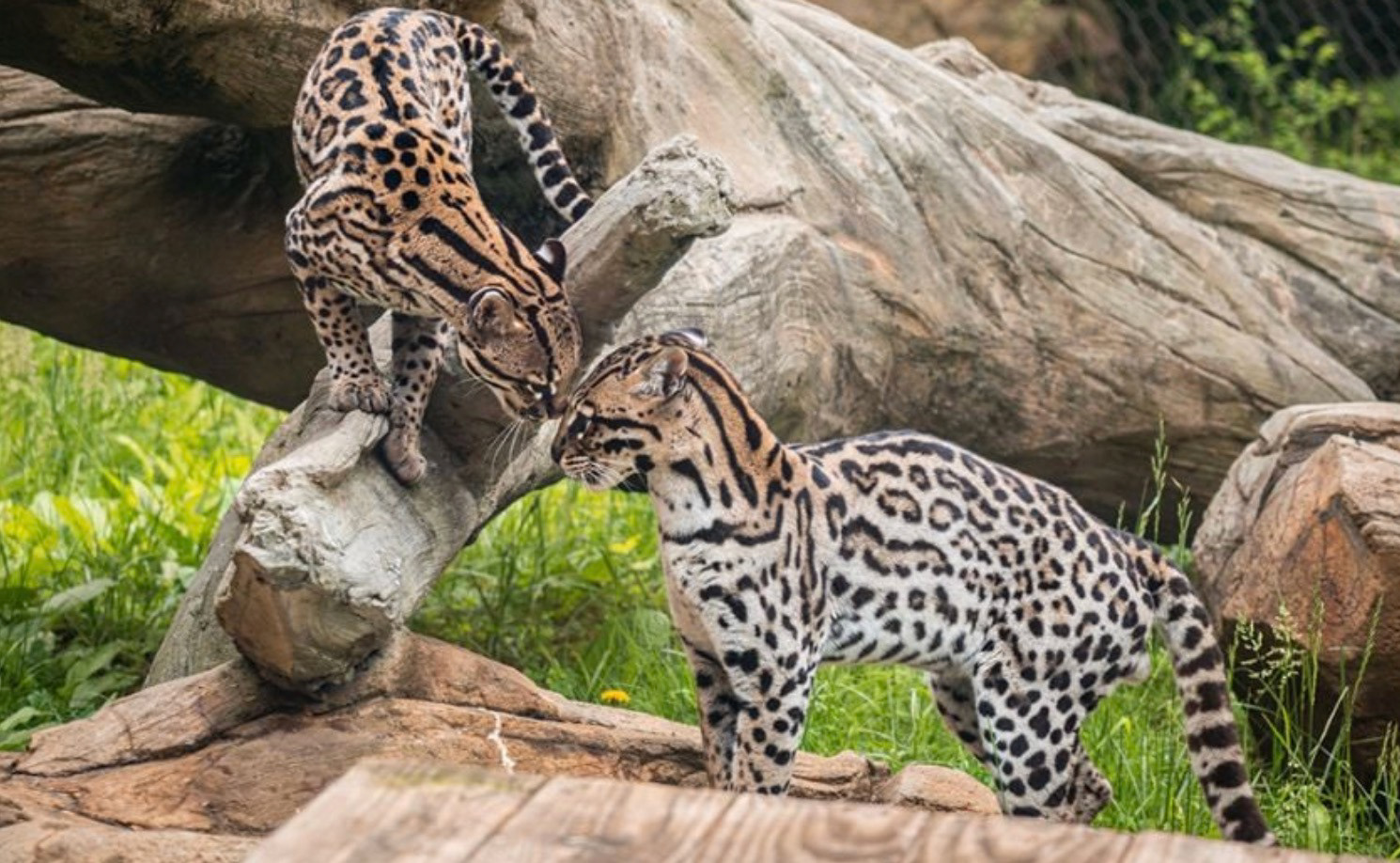
Photo Credit: © Michal Kortsarts at the Elmwood Park Zoo.
Within the borders of the United States of America, breeding populations exist for four wild cat species—the puma, bobcat, Canada lynx, and ocelot. The inclusion of ocelots may seem surprising as ocelots are more typically associated with the tropical rainforests of Latin America and not the dry thorn scrub habitat of South Texas, where America’s last wild ocelots are found.
Texas ocelots, consisting of just 80 to 120 individuals, are fragmented into two populations. One can be found at the Laguna Atascosa National Wildlife Refuge near Brownsville, and the other is located on private ranchlands farther north along the Gulf Coast. Unfortunately, habitat loss, vehicle strikes, threat of wildfires and hurricanes, and low gene diversity are pushing America’s most imperiled wild cat closer to extinction with each passing year.
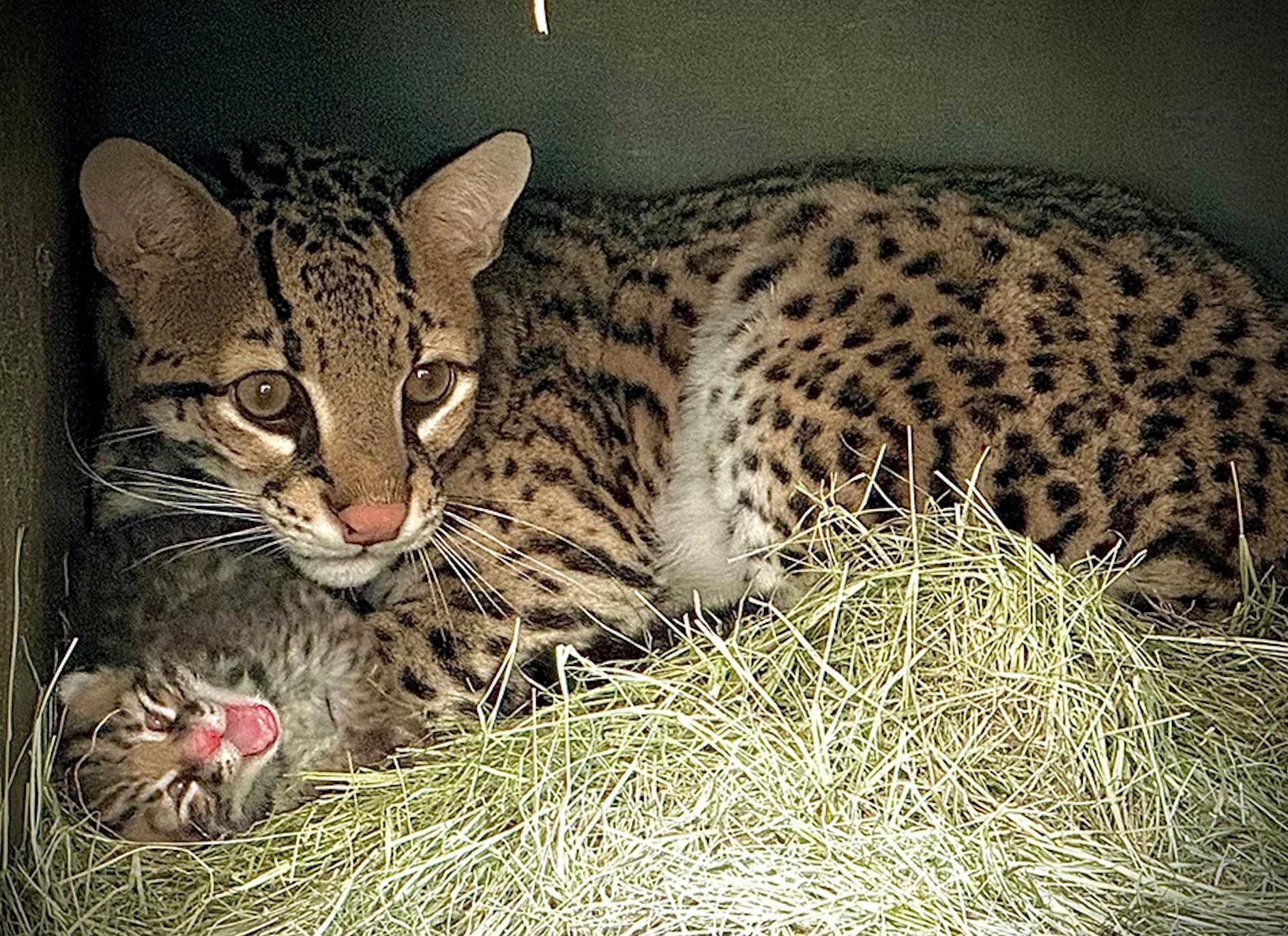
Photo Credit: © Orange County Zoo
To support conservation efforts for Texas ocelots, SAFE Ocelot was initiated in 2023 under the auspices of the Association of Zoos and Aquariums (AZA), with final approval of the SAFE Ocelot Program Action Plan in 2025.
The program was established with two primary objectives: first, to provide zoo-sourced ocelots, husbandry expertise, and logistical support for ocelot propagation, wilding, and reintroduction in Texas; and second, to raise awareness about Texas ocelots and educate and engage the public to support ocelot conservation. SAFE Ocelot continues to grow, adding three new program partners over the past year, bringing the total to nine institutions.
During that period, SAFE Ocelot also made significant progress toward achieving its objectives within the Texas Ocelot Recovery Program. This multi-institutional collaboration also includes AZA’s Ocelot Species Survival Plan® (SSP) program, Texas A&M University, Duquesne University, University of California - Davis, U.S. Fish and Wildlife Service, Texas Parks and Wildlife, and the East Foundation.
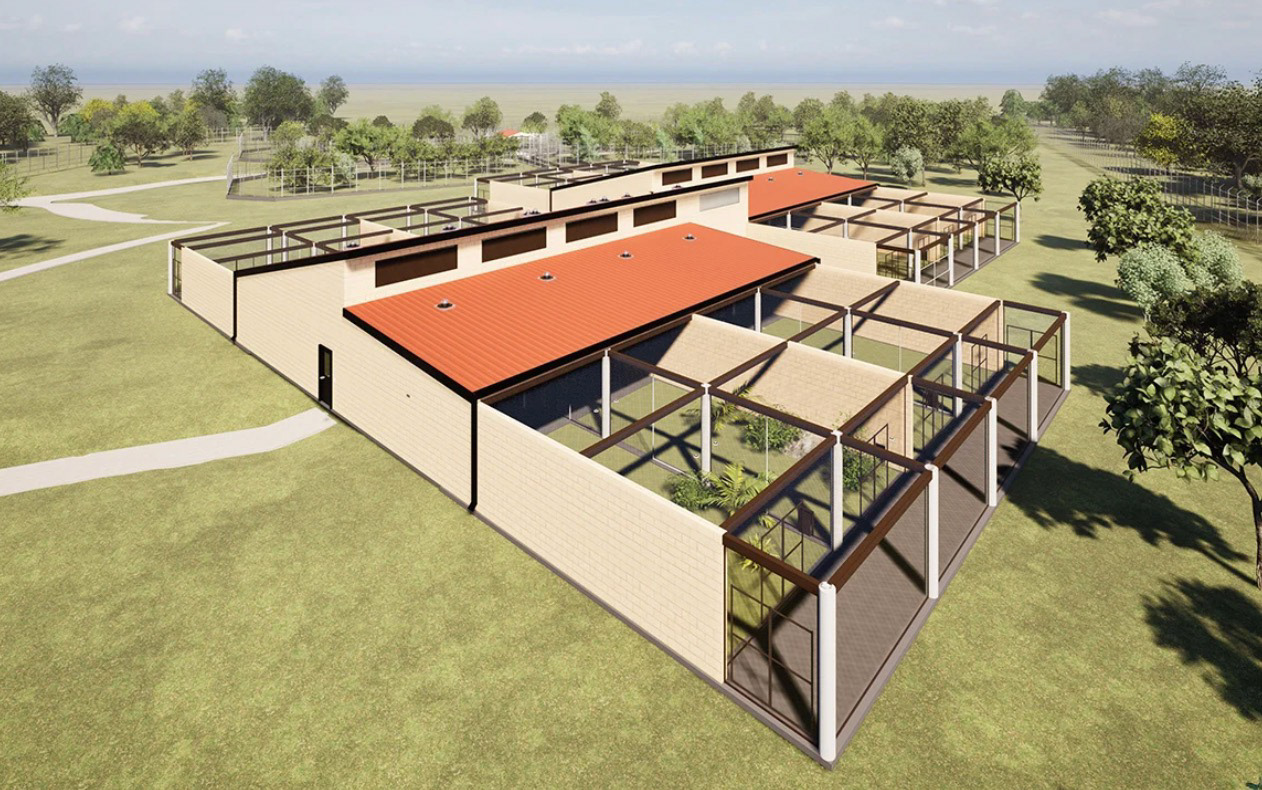
Rendering of Ocelot Conservation Facility. Photo Credit: © CLK Architects.
One example of this progress is the construction of the Ocelot Conservation Facility at Texas A&M University—Kingsville, which is on schedule for completion by Fall 2026. The Facility, comprising a veterinary science building, breeding facility, and wilding facility, is an invaluable resource for achieving the recovery program’s goal of establishing a new ocelot population in historical but unoccupied ocelot habitat on Texas ranches.
Four female ocelots in zoos have already been identified for transfer to the Ocelot Conservation Facility later this year based on pedigree, molecular genetic analysis, and breeding history. Interbreeding of zoo-sourced and wild Texas ocelots is expected to broaden the genetic diversity of resulting kittens and, hopefully, improve their prospects for survival after wilding and reintroduction onto Texas ranchlands.
Additionally, SAFE Ocelot has provided funding to three AZA-accredited zoos to modify their ocelot habitats to improve breeding success and offspring production of breeding pairs recommended by the Ocelot SSP. Modifications have included the addition of remote cameras/monitoring systems, nest boxes, squeeze/transfer chutes, shelving, shift doors, and dividing walls.
Funding accessed via a subcontract with Texas A&M University has also been committed to five other zoos to complete ongoing ocelot infrastructure modifications at their institutions. Improved breeding success in zoos will ensure the availability of ocelots for future transfer to the Ocelot Conservation Facility to support long-term reintroduction efforts and assure the sustainability of the Ocelot SSP population within zoos.
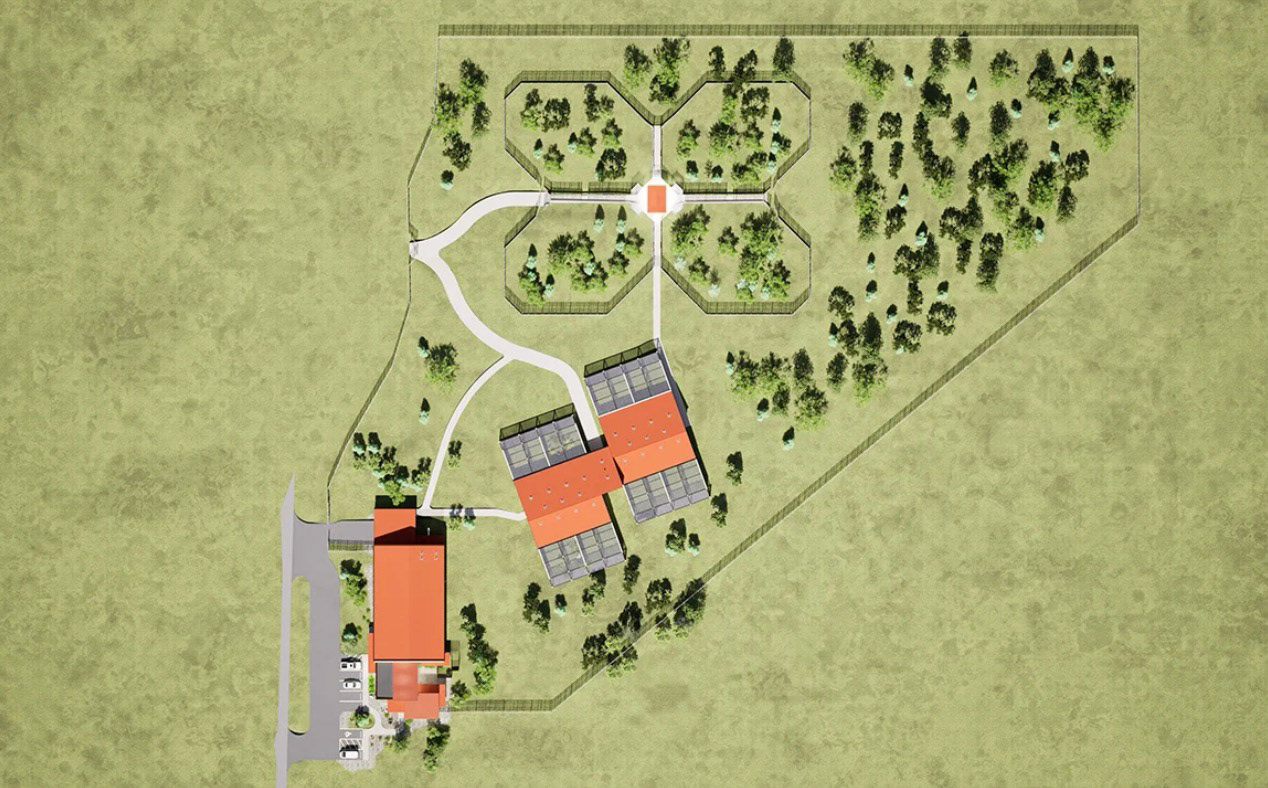
Aerial view rendering of the Ocelot Conservation Facility. Photo Credit: © CLK Architects.
Another priority of SAFE Ocelot over the past year has been developing education initiatives to address ocelot awareness and knowledge across Texas and other southwestern states. The SAFE Ocelot Education Liaison, Valeria Hernandez, at the Houston Zoo in Houston, Texas, has been contacting zoo educators to identify awareness/education needs and begin strategic planning to achieve our education objectives.
One focus of the upcoming SAFE Ocelot/Ocelot SSP meeting, held in conjunction with the Felid Taxon Advisory Group (TAG) Conference hosted by the Houston Zoo (19-22 May), will be convening a facilitated working group for educators and other interested parties to further explore education needs, challenges, and solutions.
Those interested in attending the SAFE Ocelot/Ocelot SSP meeting in May and/or participating in the education working group should contact Valeria Hernandez or the Ocelot SSP coordinator, Laura Carpenter.
For more information about SAFE Ocelot or to become a Program Partner, please contact Laura Carpenter or SAFE Ocelot Program Leader Dr. Bill Swanson
Dr. Bill Swanson is the director of animal research at the Cincinnati Zoo’s Center for Conservation and Research of Endangered Wildlife (CREW).
This story is part of AZA’s SAFE Series, which highlights the conservation work of AZA-accredited zoos, aquariums, and their partners through SAFE: Saving Animals From Extinction. Learn more on AZA’s SAFE webpage.